The Anti-Inflammatory Diet for Depression and Anxiety
The anti-inflammatory (AI) diet is focused on reduction and resolution of chronic and acute inflammation through diet. This diet spotlights integration of anti-inflammatory foods, like fruits and vegetables, healthy fats, fiber, antioxidants and phytochemicals, and the reduction of proinflammatory foods, like omega-6 fats, trans fats, highly processed foods, refined carbs, and
artificial sweeteners from our lifestyle. This diet can help modulate blood sugar response,
reduce risk of cardiovascular disease, and improve sleep, energy, and mood (1).
The anti-inflammatory diet can serve as a therapeutic intervention for anxiety and depression.
Mood disorders and inflammation are closely intertwined, and recent data suggests that they
are powering each other, lending to a difficult to break loop of chronic inflammation (2). By
aiding the body in reducing and resolving inflammation via the AI diet we may be able to break
this cyclic inflammatory response and improve the health of those struggling with a mood
disorder. Learning how the body resolves inflammation is the first step to understanding the AI
diet .

What is Inflammation?
Inflammation is necessary for our body’s response to infection and injury, but when it becomes chronic it can cause and exacerbate many health related issues such as cardiovascular disease, autoimmune disease, cognitive decline, cancer, depression, anxiety and many others. Many things can trigger inflammation including stress, blood sugar, food sensitivities and allergies, environmental factors, hormones, and genetics. There are three stages to the inflammatory cascade. The first being the initiation of inflammation. This is triggered by several
proinflammatory molecules, many of which are derived from omega-6 fats, called eicosanoids.
The inflammation builds and builds until it reaches stage two: the eicosanoid switch. The
eicosanoid switch represents a critical turning point where the production of these
proinflammatory eicosanoids gives way to the generation of specialized pro-resolving mediators like resolvins, protectins, and lipoxins (3). The third and final stage is the termination phase, where there is sufficient lipoxins available to inhibit and resolve inflammation.
The Gut-Brain Axis
One of the main channels that can affect inflammation and the nervous system in those with a mood disorder is the gut-brain axis. This is a bidirectional communication pathway that links the digestive system to the nervous system. Clinical, epidemiological, and immunological evidence
suggest that enteric microbiota extensively and profoundly influences the gut-brain relationship i.e, mental state, emotional regulation, neuromuscular function, and regulation of the HPA).
Research continues to elucidate mechanisms of action to explain the effects of microbiota, both
directly and indirectly, on emotional and cognitive centres of the brain and has demonstrated
that fluctuations of the microbiota are linked to changes within these systems of
communication (4). In mood disorders, elevated levels of proinflammatory molecules promote permeability in the intestinal tract by suppressing tight junction barrier function, which can lead to leaky gut problems and increased food sensitivities which cause more inflammation. One of these proinflammatory molecules is called zonulin. Zonulin can be triggered by gluten and leads to increased gut permeability (5).
Inflammation and How it Interacts with Depression and Anxiety
It has been found that those with psychiatric disorders such as Major Depressive Disorder have more expression and mutation of immune‐related genes, higher oxidative stress markers, more neuroinflammation, higher prevalence of autoimmune diseases, and higher prevalence of
diseases with a proinflammatory status (cardiovascular diseases, type 2 diabetes, and obesity)
(2). There is also an apparent link between inflammatory GI diseases and comorbidity of depression and anxiety.
The Diet
What Should You Eat?
The core principles of an anti-inflammatory diet are: the reduction of proinflammatory foods
and the integration of anti-inflammatory foods into the diet. The AI diet also recommends gentle to moderate exercise, as excessive exercise can also lend itself to increased inflammation. It is important to remember that stress is also a large contributor to inflammation so it is important
to try to reduce stress whenever possible. You can do this by engaging in yoga or meditation,
spending time with loved ones, making sure to get enough sleep, and by finding a creative outlet!
Foods that are recommended while on this diet include:
fruits and vegetables
cold-water fatty fish
nuts and seeds
legumes
whole grains
lean protein
healthy fats
herbs and spices
Fruits, vegetables, nuts, seeds, legumes, herbs, and spices all have a type of compound called Flavonoids. Flavonoids possess numerous medicinal properties such as antioxidant, anti-cancer, anti-microbial, neuroprotective, and anti-inflammation. Studies show that flavonoids activate
antioxidant pathways that render an anti-inflammatory effect (6). Omega-3 fats are an incredibly important part of resolving inflammation in the body. Omega-3 rich foods include cold-water fish, flax and chia seeds, and walnuts.
Fiber is another incredibly crucial nutrient that the AI focuses on. Fiber is a plant substance that
the human body doesn’t digest, instead the fiber feeds our gut microbiome which in turn
modulates our gut-brain axis and so on. Dietary fiber intake has been shown to affect markers of
inflammation. Prebiotics are a type of fiber that results in specific changes in the composition
and/or activity of the gastrointestinal microbiota (7). Some beneficial prebiotics are whole
grains, bananas, leafy greens, onions, garlic, and artichokes. Foods rich in probiotics can also be
helpful to gut health. These foods include fermented foods like sauerkraut, kimchi, yogurt, miso,
and kombucha. Probiotics are foods that have been inoculated with a colony of bacteria that
ferments the food. These bacteria can be beneficial for the gut microbiome.
Anti-Inflammatory Compounds for Anxiety and Depression
Some specific foods and herbs that have anti-inflammatory and anti-anxiety/depression benefits are green tea, lavender, and turmeric.
Green Tea
Green tea has a compound called epigallocatechin-3- gallate (EGCG) that has been
indicated in anti-inflammatory
action in the body (8). Green
tea also contains an amino acid called L -Theanine. L-theanine
signifcantly increases activity
in the brain’s alpha frequency band which indicates that it relaxes the mind without inducing drowsiness. It also shows an improvement in
biomarkers, including salivary
α-amylase, cortisol, chromogranin A and immunoglobulin A related to stress and anxiety.
Lavender
Lavender essential oil has been found to be a a potent inhibitor of the synthesis of four pro-inflammatory cytokines (9).
Lavender essential oil has also
been extensively studied as an
alternative to anxiety
medication and has been found to decrease symptoms of
anxiety and improve sleep quality. This may be by virtue of lavender’s high content of linalool and linalyl acetate.
Turmeric
Turmeric, a rhizome like ginger, contains an active compound called curcumin. Curcumin has
been shown to have anti-
inflammatory, antioxidant, and
anti-cancer properties.
Curcumin has displayed a
potency in modulating
neurotransmitter
concentrations, inflammatory pathways, excitotoxicity, neuroplasticity, and oxidative stress, all of which can be
involved in Major Depressive
Disorder pathophysiology (10)
What Foods Should You Avoid?
There are a few foods that have been shown to increase inflammation in the body that are recommended to avoid during this diet.
Those include:
refined carbohydrates
gluten
refined sugars
Omega-6 rich oils like corn and soybean oil
highly processed foods
conventionally grown meat and dairy
trans fats
excessive alcohol
It is recommended to avoid gluten because as was referenced in paragraph 4, gluten may trigger the release of zonulin which can loosen the tight junction between our cells in the gut, leading to leaking of foodstuffs from the gut that may not be fully broken down. This can lead the body to
identify those compounds as pathogenic and activate the immune system which leads to
inflammation. Omega-6 fats are converted into arachidonic acid in the body. Arachidonic acid
then is converted into proinflammatory eicosanoids. Omega-6 is a necessary compound that our body cannot create, so some is needed, but in the current American diet people are consuming
too large of a ratio of omega-6 to omega-3 fats (approximately 20:1). The recommended ratio is
2:1. These omega-6 fats come mainly from our highly processed oils and foods. Highly processed foods can also contain elevated levels of a compound called Glutamate. Excessive accumulation of glutamate in the synaptic cleft has been associated with neuron cell death (excitotoxicity) and glutamate is implicated in a number of neurological disorders.
Sample Menu Plan
Breakfast | Two large fried eggs with a sliced avocado and a banana |
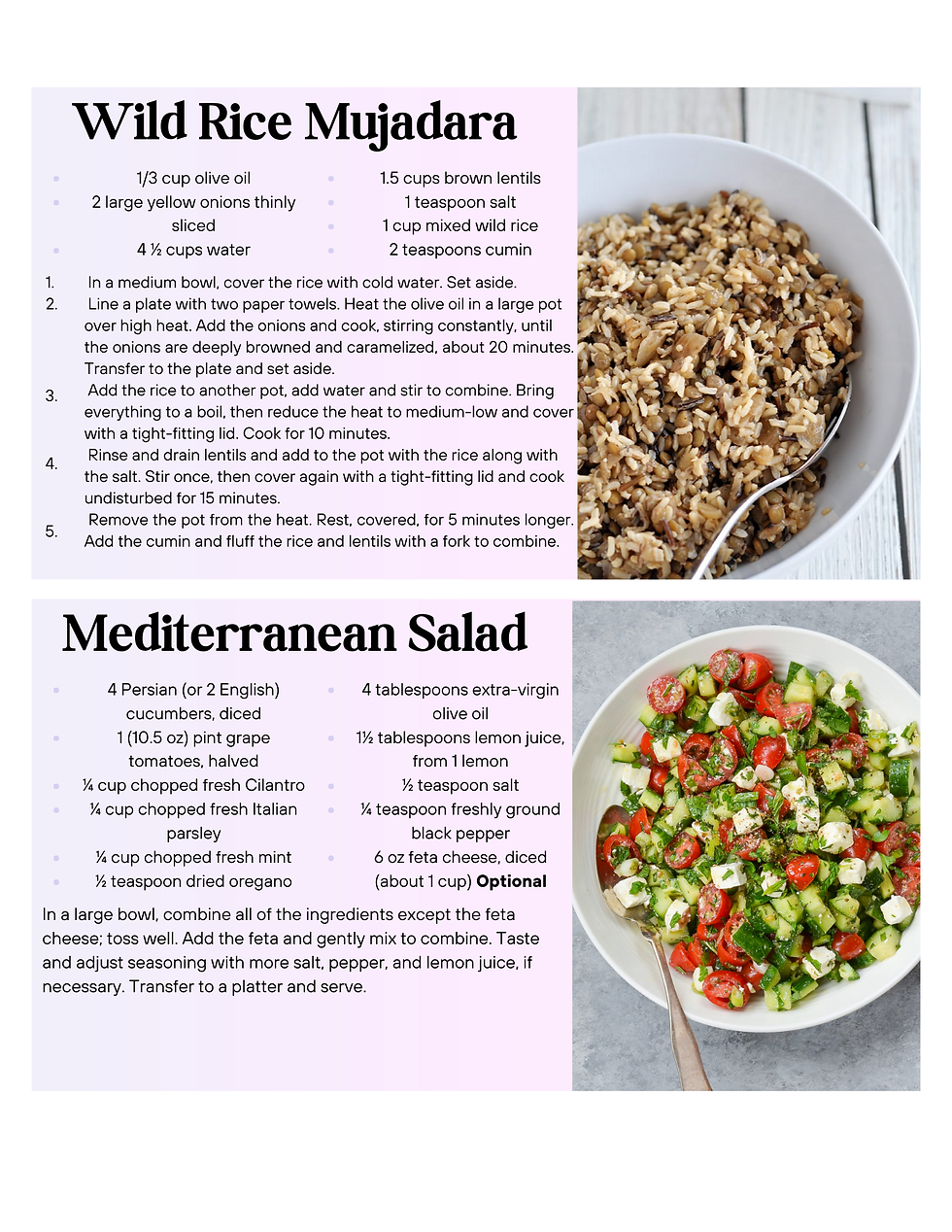
Lunch | Wild-rice Mujadara with a Mediterranean salad |
Dinner | Coconut Turmeric Chicken Thighs with Kale, and a root vegetable hash |
Snack | An apple with walnut butter |
Drink | Lavender green tea |

Works Cited
Scheiber A, Mank V. Anti-Inflammatory Diets. PubMed. Published 2023. https://www.ncbi.nlm.nih.gov/books/NBK597377/
Bauer ME, Teixeira AL. Inflammation in psychiatric disorders: what comes first? Annals of the New York Academy of Sciences. 2018;1437(1):57-67. doi:https://doi.org/10.1111/nyas.13712
Chistyakov DV, Astakhova AA, Marina Georgiyevna Sergeeva. Resolution of inflammation and mood disorders. 2018;105(2):190-201. doi:https://doi.org/10.1016/j.yexmp.2018.08.002
Appleton J. The Gut-Brain Axis: Influence of Microbiota on Mood and Mental Health. Integrative Medicine: A Clinician’s Journal. 2018;17(4):28-32. https://www.ncbi.nlm.nih.gov/pmc/articles/PMC6469458/#:~:text=The%20gut%2Dbrain%20axis%20is
Fasano A. All disease begins in the (leaky) gut: role of zonulin-mediated gut permeability in the pathogenesis of some chronic inflammatory diseases. F1000Research. 2020;9:69. doi:https://doi.org/10.12688/f1000research.20510.1
Al-Khayri JM, Sahana GR, Nagella P, Joseph BV, Alessa FM, Al-Mssallem MQ. Flavonoids as Potential Anti-Inflammatory Molecules: A Review. Molecules. 2022;27(9):2901. doi:https://doi.org/10.3390/molecules27092901
Davani-Davari D, Negahdaripour M, Karimzadeh I, et al. Prebiotics: Definition, Types, Sources, Mechanisms, and Clinical Applications. Foods. 2019;8(3):92. https://www.ncbi.nlm.nih.gov/pmc/articles/PMC6463098/
Ohishi T, Goto S, Monira P, Isemura M, Nakamura Y. Anti-inflammatory Action of Green Tea. Anti-Inflammatory & Anti-Allergy Agents in Medicinal Chemistry. 2016;15(2):74-90. doi:https://doi.org/10.2174/1871523015666160915154443
Pandur E, Balatinácz A, Micalizzi G, et al. Anti-inflammatory effect of lavender (Lavandula angustifolia Mill.) essential oil prepared during different plant phenophases on THP-1 macrophages. BMC Complementary Medicine and Therapies. 2021;21(1). doi:https://doi.org/10.1186/s12906-021-03461-5
Ramaholimihaso T, Bouazzaoui F, Kaladjian A. Curcumin in Depression: Potential Mechanisms of Action and Current Evidence—A Narrative Review. Frontiers in Psychiatry. 2020;11. doi:https://doi.org/10.3389/fpsyt.2020.572533


Comments